Trade traffic with me using 2leep.com system

Mozquitoo: fact
Showing posts with label fact. Show all posts

Thursday, January 12, 2012

9 Amazing Facts about China

Today’s China is not a same country our father knew 6 decades ago. Everybody knows that present day’s China is more powerful and known as one of the most prosperous country on Planet earth. With their communist law, China has become a new center of economy, education, investment and science worldwide. On the following post, we are going to explore 9 amazing things about China.

9. China that we know today is a new China from the revolution of 1 October 1949. View year early, After Japan occupied China, Nationalist and Communists united to cast Japanese Armies away. Couple of year’s later, communist party led by Mao Zedong outrun nationalists and led China until present day.

8 . Same as a decade ago, China is the leader of world’s population number. Today, total Chinese on the planet is 1.3 billion. The total number is bigger than Indians and Americans combined.

7. China is known as one of the most industrious nation on earth. The number of total workforce touches 800,000,000 million people and beyond. Around 2 years ago, these people produced:
22,3 Billion cigarettes
619, 200.000 China Cell phones
13, 2 million tons of Sugar
13, 800.000 unit motors
59, 300.000 refrigerator
67,600.000 LCD TVs

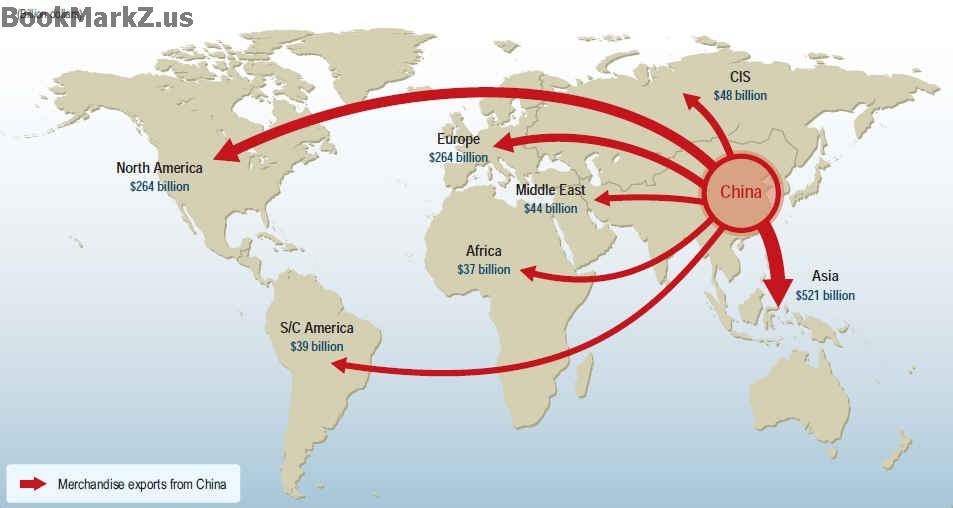
6. In Business, China is one of the biggest exporters in the world.
- China Exported Shoes worth $28,000,000,000 in 2009
-China Exported Cell phones worth $39,600,000,000 in a same year
-and China Had also exported men, women and Children’s garment valued $107,100,000,000 in that year.

5. For China, US is 2nd most important business allies. Each Year, US bought China’s product worth
$220,000,000,000

4. This is view cool Facts about China related to Rice:


-In China, around 300 million people has proficient as Farmers
-China is one of the largest rice exporters in the world. China exports 26% of total demands of Rice Worldwide or around 193,000,000 tons
-In 2008 alone, Native Chinese in China Mainland had consumed 130,700,000 tons of rice
- Chinese consumed 300,000,000 turtles every year.

3. Cool facts about China’s Military:


- China has the biggest number of Armies in the world. China has 3,400,000 active armies and 1,200,000 reserve armies.
-China’s military shopping budget is the 2nd biggest in the world follows US
- China’s military reserves 100-400 nuclear warheads and 7,500 tanks
-China’s Air Force composes 2,024 aircraft behind Russia that has 2,832-fighter plane and US with 5,550 air fighters.


2. One of greatest Modern China’s achievements is the restoration of a fair law. In the last 10 years, China’s court has prosecuted more narcotics smugglers, corruption, tax fraudster and top class criminals with bullets or deadly injection.

1. The number of Chinese Mafia or Triad is the 2nd biggest in the world. Triad groups around 250,000 followers follows Russian Mafia (100.000-500,000 member). After Triad, Yakuza sits on 3rd rank of biggest mafia in the world (86,000 member) and Italian Mafia or Cosa Nostra with 4,000 followers.


Wednesday, October 26, 2011

11 Little-Known Facts About Japan

Did you know that the “V Sign” is how you gesture “F*** You!” in Japan. Before you travel, please check out this 11 Little-Known Facts About Japan

The Japanese point with their middle finger instead of their index finger like we do.


So, if you were in Japan and you got angry and flipped off a Japanese person, there is a good chance they are going to look up wondering what the hell you are pointing at!. Conversely, a thumb placed between the middle and index fingers (the “nose stealing” gesture) is on obscene gesture in some parts of Japan.

Trains are so crowded that railway staff are hired to cram passengers inside.


The Tokyo Subways are legendary for the way people are “packed in” at rush hour. A “Train Pusher” or oshiya, pushes bodies into every inch of space during the morning and evening rush hours.

It becomes difficult to shut the doors when the number of passengers is over 200% of a train’s capacity, but pushers are often stationed on platforms when trains are at around 120% capacity,

When they were first brought in at Shinjuku Station, they were called “passenger arrangement staff” and were largely made up of students working part-time; nowadays, station staff and/or part-time workers fill these roles during morning rush hours on many lines

There are vending machines in Japan that dispense beer


Most people probably know that Japan has lots of vending machines, according to wikipedia there is one for every 23 Japanese people and there are a lot of Japanese people. Japan has one of the world’s highest vending machine densities.

What some people might not know is the range of things you can get from a vending machine here. Not just snacks and magazines. You can also buy beer, whiskey, sake, cocktails and more.

The Japanese government have introduced a Taspo card for buying cigarettes, you have to be over 21 and use one of these to buy cigarettes from a machine. Some of the machines also have age recognition cameras and software, but we read that some “smart” kid fooled this by standing on his bike, so the machine thought he was tall enough to be an adult! link

The first geisha were actually men!


Yes, it’s true!. The male Geisha were known as Honko and would dance for their
clients in bars, restaurants, and the Geisha staple. Many people believe that
Geisha were prostitutes, but this is actually quite far from their true occupation. Geisha actually means “person of the arts”. They were expert musicians, dancers and amusing story-tellers who liked to touch upon taboo subjects. link

There are no 24 hour ATMs in Japan

<

Most ATMs are not 24-hour in Japan. Standard Japanese ATMs are open from 9am to 7pm on weekdays, and more limited hours on Saturday and Sunday; the machines are closed evenings and holidays.link

The “V Sign” is an obscene insult


Make the peace sign. Then move your hand to where the back of it is facing the computer screen. This is how you gesture “F*** You!” in Japan. So if I were you, if you ever go to Japan, don’t try to say “peace” in 1970′s style.

It is considered rude to say the word “no” directly


In the Japanese language, it is considered rude to say the word “no” directly. Instead, people often say “hmm” or reword things as a question.

The Japanese live longer than anybody else in the world


The island of Okinawa, in Japan, is the best place on earth for healthy aging.
The Okinawans have more people over 100 years old per 100,000 population than anywhere else in the world, the lowest death rates from cancer, heart disease and stroke (the top three killers in the US), the highest life expectancy for both males and females over 65
and females in Okinawa have the highest life expectancy in all age groups.link

The green traffic light is called “blue”.


According to the book, Japan From A to Z: Mysteries of Everyday Life Explained by James and Michiko Vardaman, the first traffic signals in Japan were blue instead of green, but the blue lights were difficult to see from a long distance away so they were replaced with green ones. Vardaman says that the custom of referring to traffic lights is a holdover from those days.
This sounds like a good explanation, but the problem with it is that you will hear Japanese people refer to other green things (like cucumbers, spinach, and sometimes grass) as being blue as well. This is because historically, Japanese people considered green to be a shade of blue. For example, the Chinese character for blue, pronounced ao is made up of two characters, iki (life) and i (well) and refers to the colour of plants which grow around a well, a colour between green and blue. When Chinese people see the character, they say it means green, but Japanese people say it means blue.

Japanese books on colours tell us that there are four tertiary colours: red, blue, white and black, and that all others are shades of those four main ones. Ao, therefore, is a sort of ideal blue, halfway between green and blue. The sky is said to be blue, but it is a different shade of ao than a traffic light is. Tree leaves are said to be green, but green is a shade of ao, like crimson is a shade of red. In another interesting cultural difference relating to colour, Japanese children always colour the sun red instead of yellow.link

Takes about 3-7 years of intensive training to become a fugu (blowfish) chef.


Fugu, also known as blowfish contain a powerful toxin 12,00 times more poisonous than cyanide. Ingestion of this toxin is deadly, and so fugu, served exclusively in Japan, are prepared with special care.

Chefs who wish to serve fugu must undertake a rigorous three-year training course and set of exams. The exams are both written and practical, and at the end, the chef must eat the fugu she has prepared. According to the BBC, only one quarter of all chefs who try pass the written test. Chefs who are color-blind or have otherwise poor vision, tremors or other physical conditions that would prevent them from proper identification of the fish’s organs or precise preparation are not permitted to become fugu chefs.

This training may not be needed in the future as some fish farms in Japan are producing non-poisonous fugu. link

Most of its territory is in the sea.


Japan is a country made up of more than 6800 islands. The islands make up less than 15 percent of Japan’s total territory. Most of its territory is in the sea.link

Wednesday, October 12, 2011

The Amazing Moment in Life


so simple but it’s amazing if this is your life…

Monday, October 10, 2011

10 Things You Didn't Know About You

The human body is a great, sweaty, fluid-filled machine, moving and mixing chemicals with precision and coordination, making everything from memories to mucus. Here we explore some of the complex, beautiful or just plain gross mysteries of how you function.

10. Your Stomach Secretes Corrosive Acid


There's one dangerous liquid no airport security can confiscate from you: It's in your gut. Your stomach cells secrete hydrochloric acid, a corrosive compound used to treat metals in the industrial world. It can pickle steel, but mucous lining the stomach wall keeps this poisonous liquid safely in the digestive system, breaking down lunch.

9. Body Position Affects Your Memory

Can't remember your anniversary, hubby? Try getting down on one knee. Memories are highly embodied in our senses. A scent or sound may evoke a distant episode from one's childhood. The connections can be obvious (a bicycle bell makes you remember your old paper route) or inscrutable. A recent study helps decipher some of this embodiment. An article in the January 2007 issue of Cognition reports that episodes from your past are remembered faster and better while in a body position similar to the pose struck during the event.

8. Bones Break (Down) to Balance Minerals

In addition to supporting the bag of organs and muscles that is our body, bones help regulate our calcium levels. Bones contain both phosphorus and calcium, the latter of which is needed by muscles and nerves. If the element is in short supply, certain hormones will cause bones to break downeupping calcium levels in the bodyeuntil the appropriate extracellular concentration is reached.

7. Much of a Meal is Food For Thought

Though it makes up only 2 percent of our total body weight, the brain demands 20 percent of the body's oxygen and calories. To keep our noggin well-stocked with resources, three major cerebral arteries are constantly pumping in oxygen. A blockage or break in one of them starves brain cells of the energy they require to function, impairing the functions controlled by that region. This is a stroke.

6. Thousands of Eggs Unused by Ovaries

When a woman reaches her late 40s or early 50s, the monthly menstrual cycle that controls her hormone levels and readies ova for insemination ceases. Her ovaries have been producing less and less estrogen, inciting physical and emotional changes across her body. Her underdeveloped egg follicles begin to fail to release ova as regularly as before. The average adolescent girl has 34,000 underdeveloped egg follicles, although only 350 or so mature during her life (at the rate of about one per month). The unused egg follicles then deteriorate. With no potential pregnancy on the horizon, the brain can stop managing the release of ova.

5. Puberty Reshapes Brain Structure, Makes for Missed Curfews

We know that hormone-fueled changes in the body are necessary to encourage growth and ready the body for reproduction. But why is adolescence so emotionally unpleasant? Hormones like testosterone actually influence the development of neurons in the brain, and the changes made to brain structure have many behavioral consequences. Expect emotional awkwardness, apathy and poor decision-making skills as regions in the frontal cortex mature.

4. Cell Hairs Move Mucus

Most cells in our bodies sport hair-like organelles called cilia that help out with a variety of functions, from digestion to hearing. In the nose, cilia help to drain mucus from the nasal cavity down to the throat. Cold weather slows down the draining process, causing a mucus backup that can leave you with snotty sleeves. Swollen nasal membranes or condensation can also cause a stuffed schnozzle.

3. Big Brains Cause Cramped Mouths


Evolution isn't perfect. If it were, we might have wings instead of wisdom teeth. Sometimes useless features stick around in a species simply because they're not doing much harm. But wisdom teeth weren't always a cash crop for oral surgeons. Long ago, they served as a useful third set of meat-mashing molars. But as our brains grew our jawbone structure changed, leaving us with expensively overcrowded mouths.

2. The World Laughs with You

Just as watching someone yawn can induce the behavior in yourself, recent evidence suggests that laughter is a social cue for mimicry. Hearing a laugh actually stimulates the brain region associated with facial movements. Mimicry plays an important role in social interaction. Cues like sneezing, laughing, crying and yawning may be ways of creating strong social bonds within a group.

1. Your Skin Has Four Colors

All skin, without coloring, would appear creamy white. Near-surface blood vessels add a blush of red. A yellow pigment also tints the canvas. Lastly, sepia-toned melanin, created in response to ultraviolet rays, appears black in large amounts. These four hues mix in different proportions to create the skin colors of all the peoples of Earth.

Source: http://www.aroundglobe.net
BlogCatalog Craft Blogs - BlogCatalog Blog Directory